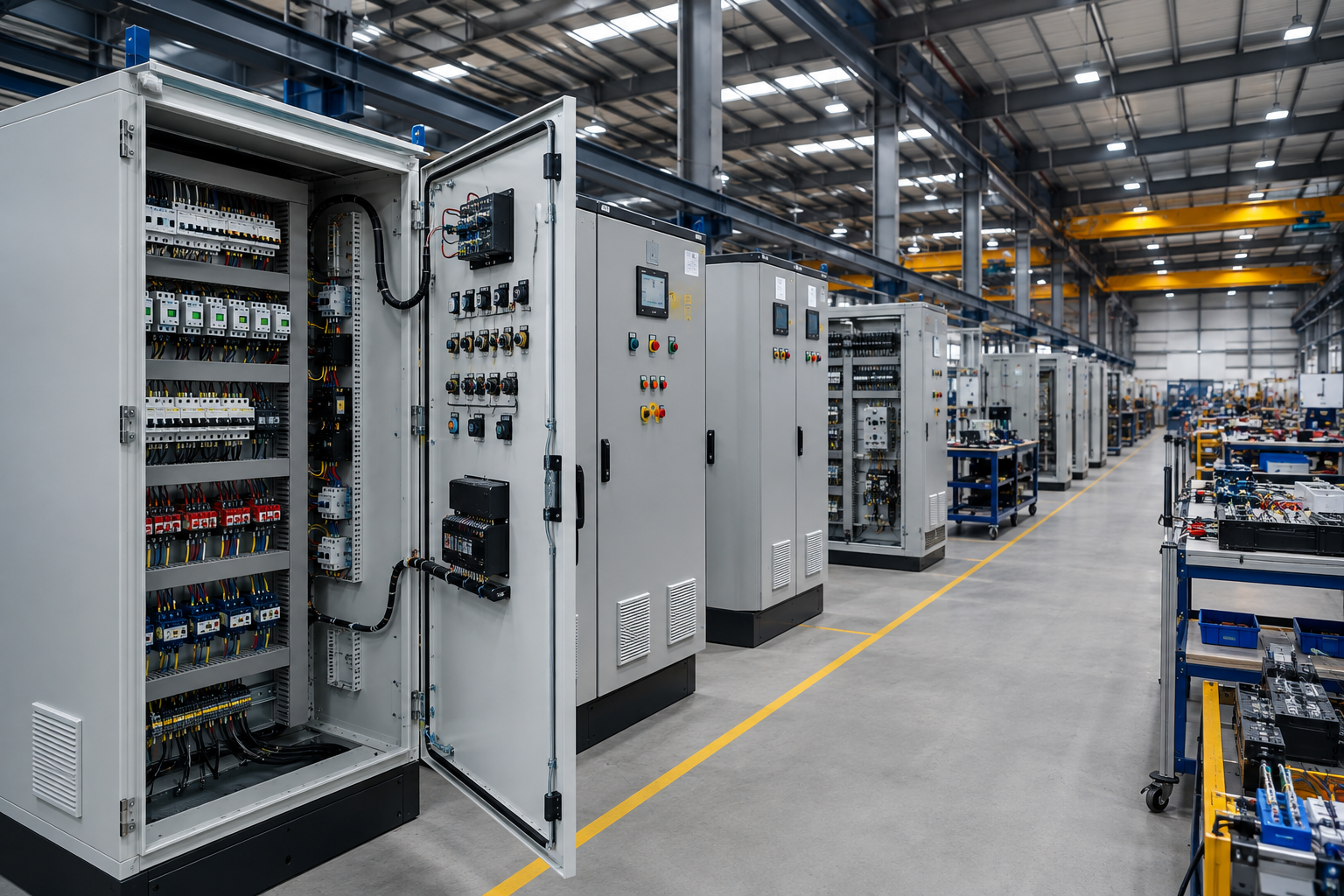
Compliance with IEC 61439: Which Panel Builders Meet the Standard?
The IEC 61439 standard ensures the safety, reliability, and efficiency of low-voltage switchgear and control gear assemblies. This standard governs the design, manufacturing, and testing processes to ensure electrical panels safely manage loads under varying conditions.
What is IEC 61439 and Why is it Important?
IEC 61439 is an international standard that defines the requirements for low-voltage electrical panels, including power distribution boards, motor control centers, and more. These panels are critical for managing electricity in industrial, commercial, and residential spaces.
By adhering to the IEC 61439 standard, these panels remain safe to operate and reliable over time, even during faults or adverse conditions.
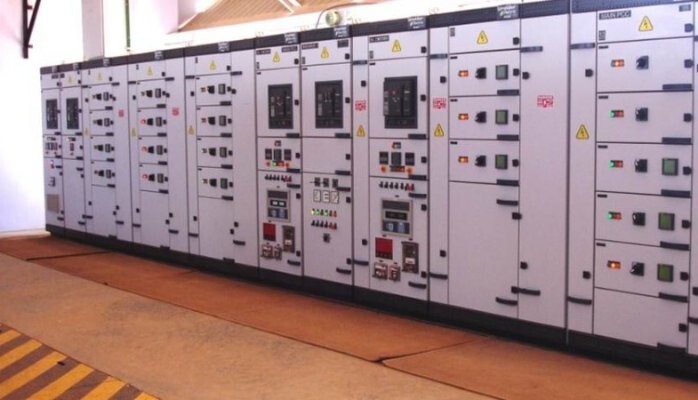
Key Benefits of IEC 61439 Compliance for Low-Voltage Switchgear
Longevity: Reduces maintenance needs by ensuring high-quality design and testing
Enhanced Safety: Prevents electrical hazards and equipment failures.
Reliability: Ensures consistent performance under normal and fault conditions.
Compliance with Regulations: Meets legal safety standards required for installations.
How to Identify Panel Builders Complying with IEC 61439
To choose the right panel builder, follow these steps:
- Check Certifications: Ensure the builder has IEC 61439 certification.
- Review Testing Processes: Verify if their panels undergo proper design and performance testing.
- Examine Case Studies: Look at client reviews or past projects to confirm compliance.
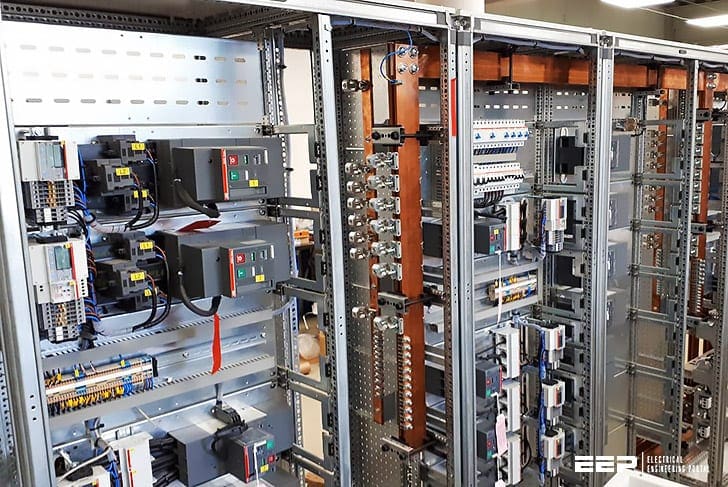

PIMA’s Commitment to IEC 61439 Standards
PIMA provides IEC 61439-compliant power panels that meet the highest standards of safety and performance. Their collaboration with leading technology partners ensures panels are reliable and meet the specific needs of various industries.
Why Non-Compliance is Risky for Electrical Installations
Choosing a panel builder who does not meet the IEC 61439 standard can result in:
- Electrical fires and equipment failures
- Shortened panel lifespan and frequent malfunctions
- Non-compliance penalties and safety risks for occupants
Conclusion: Choose IEC 61439-Compliant Builders for Safety and Reliability
Compliance with IEC 61439 ensures that low-voltage switchgear is safe, reliable, and long-lasting. When selecting a panel builder, choose one that transparently follows the standard, like PIMA, to ensure your electrical installations remain safe and operational over time.

Buying a low-voltage panel is not just a price decision. If the assembly is poorly designed or tested, it can lead to overheating, nuisance tripping, downtime, or audit issues. That is why most serious buyers now ask one clear question before signing off: is the panel builder truly following IEC 61439, or is it just written on the quotation?
If you are evaluating a panel manufacturing company for a new distribution board, a PCC, or an MCC panel, this guide will help you verify compliance with confidence and avoid expensive surprises later.
This guide explains what IEC 61439 covers, what proof to ask for, and how to shortlist panel builders who can support compliance in real projects.
What is IEC 61439 and Why is it Important?
The IEC 61439 standard is the international rulebook for low-voltage switchgear and controlgear assemblies. It sets design and verification requirements so panels can operate safely under normal load and under fault conditions. It applies to assemblies such as distribution boards, PCC panels, and MCC panels, including the requirements for temperature rise, dielectric strength, clearances, and short-circuit performance.
IEC 61439 matters because panels carry high current and fault energy. Small gaps in verification become reliability problems during commissioning or long-running operations.
Importance of IEC 61439 Compliance
By adhering to IEC 61439, panel builders ensure:
- Safety: Protection from electrical hazards.
- Reliability: Consistent operation under normal and fault conditions.
- Longevity: Durable design reduces maintenance needs.
- Regulatory Compliance: Meets legal and safety requirements.
What is the IEC standard for panel testing?
Under IEC 61439, “panel testing” is not one single test. The standard requires verification of the assembly design and routine verification of each manufactured panel. Design verification can be proven by testing, calculation, or design rules, depending on the clause. Routine verification checks that the specific panel you receive is built correctly and safe to energize.
Now let’s make that practical. When people say “type tested” or “IEC tested,” you need to ask what part was verified and what proof will be supplied with your exact panel.
Why buyers ask about IEC 61439 before approving a panel builder
When procurement teams compare quotes, the technical risk is often hidden. Two panels can look similar on a BOQ and still behave very differently on-site. IEC 61439 is the common reference that reduces guesswork.
Here is why compliance shows up in serious tenders.
-
It reduces overheating risk by forcing temperature-rise verification
-
It reduces nuisance trips by requiring design discipline and correct coordination
-
It reduces rework during audits because documentation is defined upfront
-
It improves safety by checking clearances, creepage, and protective measures
When a builder can prove verification properly, you are not buying a promise. You are buying a controlled process.
What documents prove IEC 61439 compliance?
The best proof of IEC 61439 compliance is a set of documents tied to the design and to your delivered panel. This includes design verification evidence, the panel’s nameplate data, drawings, and the routine verification report for that specific assembly. Certificates can support credibility, but they do not replace verification evidence and dispatch documentation.
If you want to shortlist panel builders quickly, ask for these documents early. It saves weeks of confusion later.
Start with what a serious buyer should request.
-
General arrangement drawing and single line diagram references
-
Bill of materials and component rating references
-
Design verification evidence for key clauses (as applicable)
-
Nameplate data proposal showing ratings and short-circuit withstand
-
Routine verification checklist and sample routine test report
When builders can show this cleanly, approvals become faster and disputes become rare.
Red flags that usually mean “IEC 61439” is just a line on the quote
Most non-compliance is not intentional. It is often process weakness. Still, red flags are red flags.
Watch for these patterns.
-
The quotation says “IEC 61439 compliant” but no verification plan is defined
-
The builder cannot explain design verification vs routine verification
-
The nameplate ratings are vague or missing short-circuit rating details
-
Testing is described as “megger test only” with no functional checks
-
Documentation is promised later without a sample pack
When you see two or three of these together, the panel may still work, but you are accepting unnecessary risk.
IEC 61439 testing checklist for panel testing & dispatch documents
For IEC 61439 panels, buyers should check that routine verification is done for every panel and that dispatch documents include drawings, nameplate data, and the routine test report. The checklist should confirm wiring workmanship, protective circuit continuity, markings, and electrical safety checks. The best suppliers provide a consistent document pack tied to the panel serial number.
Use this checklist when you approve a supplier or during FAT.
-
Visual inspection and workmanship checks
-
Wiring checks against drawings and terminal schedules
-
Protective circuit continuity verification
-
Functional checks of interlocks and controls
-
Marking and labeling checks (safety labels, circuit IDs, nameplate)
-
Electrical safety checks such as dielectric or insulation checks where required by scope and method
After the FAT, insist on a clean dispatch pack that makes site work easier.
-
GA drawings and wiring drawings
-
Terminal schedules and BOM (as agreed)
-
Nameplate data matching order scope
-
Routine test report for each panel
-
Any agreed certificates for components and test references
When documentation is consistent, your commissioning time drops and handover becomes smoother.
Key Benefits of IEC 61439 Compliance for Low-Voltage Switchgear
- Longevity: Ensures durability and reduces frequent maintenance.
- Enhanced Safety: Minimizes risks of electrical fires and failures.
- Reliable Performance: Operates consistently under varied conditions.
- Legal Compliance: Meets industry regulations and standards.
How to Identify Panel Builders Complying with IEC 61439
Check Certifications
Review Testing Processes
Examine Case Studies and References
Why Non-Compliance is Risky for Electrical Installations
Failure to select an IEC 61439-compliant builder can lead to:
- Electrical Fires and Hazards: Increased risk of accidents and system failures.
- Frequent Malfunctions: Reduced panel lifespan and high maintenance costs.
- Non-Compliance Penalties: Legal and financial consequences for failing safety audits.
PIMA’s Commitment to IEC 61439 Standards
PIMA delivers IEC 61439-compliant power panels, ensuring the highest standards of:
- Safety
- Performance
- Reliability
By collaborating with leading technology partners, PIMA creates tailored solutions to meet the specific needs of diverse industries while adhering to global standards.
Conclusion: Choose IEC 61439-Compliant Builders for Safety and Reliability
Selecting an IEC 61439-compliant panel builder ensures safe, reliable, and durable electrical installations. Builders like PIMA uphold the standard, offering peace of mind and operational excellence for your systems.
Partner with PIMA for IEC 61439-compliant solutions that deliver safety, reliability, and efficiency you can trust.
FAQs about IEC 61439 panel builders
What does IEC 61439 mean for a control panel buyer?
It means the assembly is built and verified against defined rules for safety, temperature rise, dielectric strength, and fault performance.
How do I confirm a panel is IEC 61439 compliant?
Ask for design verification evidence and the routine test report that will be delivered with your specific panel.
Is a certificate enough to prove IEC 61439 compliance?
No. Certificates help, but real proof includes verification documents, drawings, nameplate data, and routine test results.
What is the difference between design verification and routine verification?
Design verification proves the design capability, while routine verification checks each manufactured panel before dispatch.
Does IEC 61439 apply to MCC and PCC panels?
Yes. It applies to low-voltage switchgear and controlgear assemblies, including MCCs and PCCs.
What documents should I receive with an IEC 61439 panel?
You should receive drawings, nameplate data, routine test reports, and other dispatch documents agreed in the order.
Can a builder use calculation instead of full testing?
Yes, some verification can be by calculation or design rules, depending on the clause and acceptable method.
Why do two IEC 61439 panels have very different prices?
Often the scope is different: short-circuit rating, busbar sizing, form of separation, IP rating, and included components.
Does IEC 61439 reduce electrical fire risk?
Yes, it reduces risk when verification is done correctly and installation matches the rated conditions.
What should I ask during a factory visit?
Ask to see wiring checks, torque control, marking standards, routine test setups, and how documentation is prepared.
Subscribe for More Insights


Meeting FDA and 21 CFR Part 11 Compliance: How Automation Simplifies a Complex Challenge


Which Panel Builders Meet the Standard?


The Impact of Pump Failures on Water Supply Systems & How Digital Monitoring Reduces Risk


Why Automotive Plants Struggle with Downtime and How Smart SCADA & MES Fix It


The Role of Digitalization in Improving Safety & Compliance in Chemical Plants


How Food and Beverage Manufacturers Can Eliminate Inconsistent Batches with MES


Meeting FDA and 21 CFR Part 11 Compliance: How Automation Simplifies a Complex Challenge


Which Panel Builders Meet the Standard?